
- Panyu District, Guangzhou, Guangdong, China
- 2044, 2nd Floor, Yayun Avenue, Dalong Street
- whatsapp:
- +86 13265357928
Using data to safeguard safety: Application practices of SPC in the pharmaceutical industry
I. Pharmaceutical Manufacturing: Why Process Stability Matters
In the pharmaceutical industry, the consequences of quality issues extend far beyond economic loss. They directly affect patient safety and expose companies to significant regulatory and compliance risks.
Compared with other manufacturing sectors, pharmaceutical production has several defining characteristics:
Highly complex processes with numerous variables
Extremely stringent quality requirements with minimal allowable variability
Any abnormality may result in batch rejection, production shutdowns, or product recalls
Strict regulatory oversight under frameworks such as GMP and authorities including the NMPA, FDA, and EMA


As a result, the core challenge of pharmaceutical quality management is not simply whether a product meets specifications, but whether:
The manufacturing process remains consistently controlled, stable, and predictable.
This is precisely where Statistical Process Control (SPC) delivers its fundamental value in the pharmaceutical industry.
II. The Role of SPC in Pharmaceutical Manufacturing
In pharmaceutical manufacturing, SPC is far more than a basic statistical quality tool. It serves as:
A critical method for maintaining continuous process control
A key data foundation within GMP systems
A vital bridge connecting processes, equipment, quality, and regulatory compliance
By continuously monitoring Critical Process Parameters (CPPs) and Critical Quality Attributes (CQAs), SPC enables pharmaceutical companies to:
Detect abnormal trends at an early stage
Prevent deviations from escalating into quality incidents
Provide objective, data-driven evidence for deviation investigations and CAPA activities
III. Typical Application Scenarios of SPC in Pharmaceutical Manufacturing
1. Raw Materials and Pre-processing
In active pharmaceutical ingredient (API) and finished dosage manufacturing, SPC is commonly applied to monitor:
Key physicochemical attributes of raw and excipient materials
Particle size distribution and moisture content
Weighing accuracy and variability
SPC allows early identification of abnormal fluctuations in raw materials or pre-processing steps, preventing issues from propagating downstream into subsequent processes.

2. Finished Dosage Manufacturing Process Control
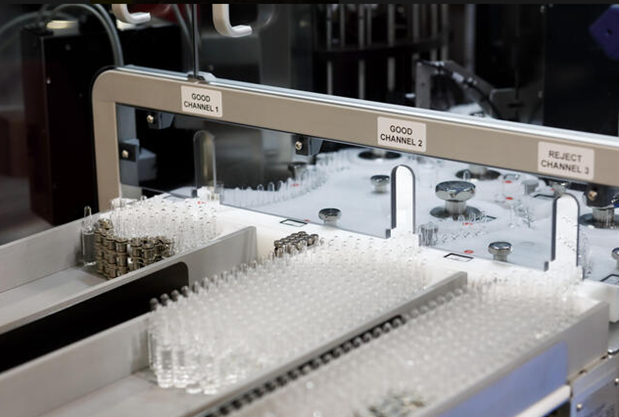
In solid and liquid dosage form manufacturing, SPC is widely used to monitor:
Mixing time and blend uniformity
Tablet weight, hardness, and thickness
Fill volume accuracy and sealing quality
SPC helps distinguish between:
Random variation, and
Systematic shifts or equipment-related abnormalities,
thereby reducing batch-to-batch variability and ensuring consistent product quality.
3. Aseptic and Cleanroom-Related Processes
For sterile products and biopharmaceutical manufacturing, SPC plays a particularly critical role in monitoring:
Environmental conditions (temperature, humidity, microbial levels, particle counts)
Sterilization process parameters
Operating status of critical equipment
Trend-based control charts enable early detection of potential loss-of-control conditions, helping prevent sterility failures before they occur.

4. Packaging and Labeling Processes
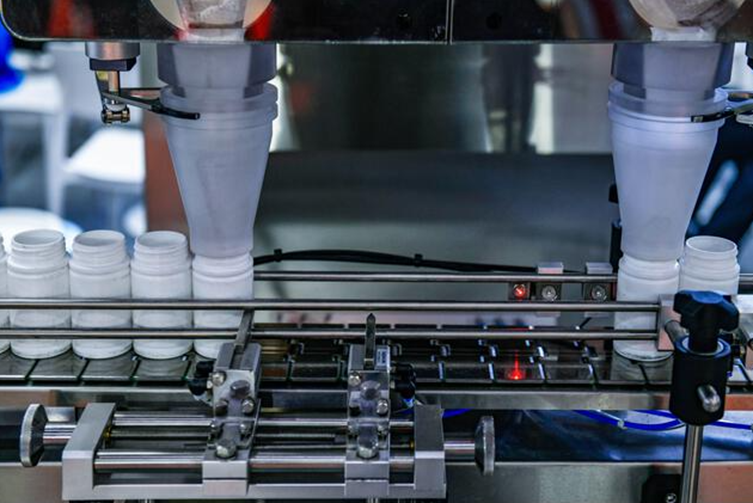
During the packaging stage, SPC is commonly applied to:
Fill consistency
Seal integrity
Label positioning and readability
Effective process control at this stage significantly reduces compliance risks related to mislabeling, underfilling, or packaging defects.
IV. Key Characteristics of SPC in the Pharmaceutical Industry
1. Strong Compliance Orientation
SPC data is frequently used to support:
GMP audits and inspections
Deviation investigations
Verification of CAPA effectiveness
By translating abstract GMP requirements into measurable and continuously monitored process indicators, SPC plays a critical role across all quality assurance activities. Data integrity, traceability, and audit readiness are especially essential.
2. Greater Focus on Trends Rather Than Single Limit Exceedances
In pharmaceutical manufacturing, many quality risks do not arise from isolated out-of-specification events, but from:
Gradual and long-term process drift.
SPC trend analysis enables proactive intervention before deviations formally occur.
3. Integration with Validation and Continued Process Verification
SPC is often implemented in conjunction with:
Process Validation (PV)
Continued Process Verification (CPV)
forming a core component of lifecycle process management.
V. Core Value Delivered by SPC to Pharmaceutical Companies
Improved process stability and product consistency
Reduced risk of batch deviations and product rejection
Stronger support for GMP compliance and regulatory audits
More efficient deviation handling and CAPA execution
Establishment of a data-driven quality culture
As regulatory expectations continue to increase, SPC has evolved from an optional tool into a foundational capability within pharmaceutical quality systems.
VI. Conclusion: SPC as the “Second Line of Defense” in Pharmaceutical Quality
In the pharmaceutical industry:
Compliance is the baseline. Stability is the core. Data is the safeguard.
Through continuous monitoring and trend analysis, SPC enables manufacturers to take action before problems occur—protecting patient safety, reducing operational risk, and supporting long-term, stable production.
Truly mature pharmaceutical manufacturing does not rely on end-product testing alone, but on controlled and predictable processes.
- An In-Depth Analysis of SPC Abnormality Detection Logic
- What types of charts can be used in dashboards for subgroup-based inspection items?
- What creative uses can be made for dashboards containing single-value test data?
- What If Subgroup Sizes Are Not Fixed?
- Invisible Variations That Define Yield :Practical Applications of SPC in Semiconductor Manufacturing
- Simple SPC 4.0 – Detailed Product Overview
- Simple SPC 4.0 Official Release
- How can risks be identified in advance in automobile manufacturing? — Sharing SPC application practices
- Innovative Practices and Applications of Web SPC Systems
- Should Manufacturing Companies Still Implement SPC Amid Economic Downturn and Poor Business Performance?
- What should we do if the customer requires the immediate implementation of SPC process control during a factory audit?
- Simple SPC has been recognized for the third time as the "2025 SPC Statistical Process Control Software of the Year" by China SoftWare Home.
- Giving SPC AI Wings: DeepSeek Enhancing Efficiency and Depth of Quality Management
- AI-Enhanced Statistical Process Control (AI-SPC): Revolutionizing Quality Management in the Era of Smart Manufacturing
- General-Purpose Artificial Intelligence Models (DeepSeek, etc.) and Statistical Process Control (SPC): A New Era of Intelligent Quality Management
- Simple SPC 2.0 released, with upgraded functions and optimized performance
- CPK and PPK: Essential Questions in Quality Interviews, Do You Truly Understand Them?
- Unilateral or Bilateral: An In-Depth Exploration of Specification Limits and Control Limits in SPC Analysis and Their Impact on Metrics
- How to Calculate Control Limits for Xbar-R and Xbar-S Control Charts in SPC Analysis and When to Use Each Chart
- Is SPC or Another Method Better for Determining Batch Consistency with Standards? A Recommended Analysis Approach
- Beyond SPC Control Charts: Lesser-Known but Effective Quality Analysis Tools
- SPC is the most accessible, effective, and performance-demonstrating analytical tool in the manufacturing industry.
- How to Quickly Identify Hidden Correlations Between Test Items Using the SPC System?